Daat Emet
  • Torah, Science & Ethics
    • Pamphlets
    • Scientific Errors in Torah
    • Religion & Ethics
    • Mitzvahs
    • Religion Caught in Its Own Net
  • Torah & Talmud
    • Weekly Portion
    • Torah Text
    • Talmud Issues
    • Daily Peppers
  • Questions & Answers
  • Who We Are
    • About Daat Emet
    • Our Supporters
    • Support Us
  • English
    • עברית (Hebrew)
    • Русский (Russian)
    • Yiddish
    • Français (French)
  • Torah, Science & Ethics
    • Pamphlets
    • Scientific Errors in Torah
    • Religion & Ethics
    • Mitzvahs
    • Religion Caught in Its Own Net
  • Torah & Talmud
    • Weekly Portion
    • Torah Text
    • Talmud Issues
    • Daily Peppers
  • Questions & Answers
  • Who We Are
    • About Daat Emet
    • Our Supporters
    • Support Us
  • English
    • עברית (Hebrew)
    • Русский (Russian)
    • Yiddish
    • Français (French)
Daat Emet
  • Torah, Science & Ethics
    • Pamphlets
    • Scientific Errors in Torah
    • Religion & Ethics
    • Mitzvahs
    • Religion Caught in Its Own Net
  • Torah & Talmud
    • Weekly Portion
    • Torah Text
    • Talmud Issues
    • Daily Peppers
  • Questions & Answers
  • Who We Are
    • About Daat Emet
    • Our Supporters
    • Support Us
  • English
    • עברית (Hebrew)
    • Русский (Russian)
    • Yiddish
    • Français (French)
  • Torah, Science & Ethics
    • Pamphlets
    • Scientific Errors in Torah
    • Religion & Ethics
    • Mitzvahs
    • Religion Caught in Its Own Net
  • Torah & Talmud
    • Weekly Portion
    • Torah Text
    • Talmud Issues
    • Daily Peppers
  • Questions & Answers
  • Who We Are
    • About Daat Emet
    • Our Supporters
    • Support Us
  • English
    • עברית (Hebrew)
    • Русский (Russian)
    • Yiddish
    • Français (French)
A widow who puts on make up and jewelry loses her right to be supported from the assets of her late husband
Home » Daily Peppers
Yaron Yadan 01/06/2010
A widow who puts on make up and jewelry loses her right to be supported from the assets of her late husband

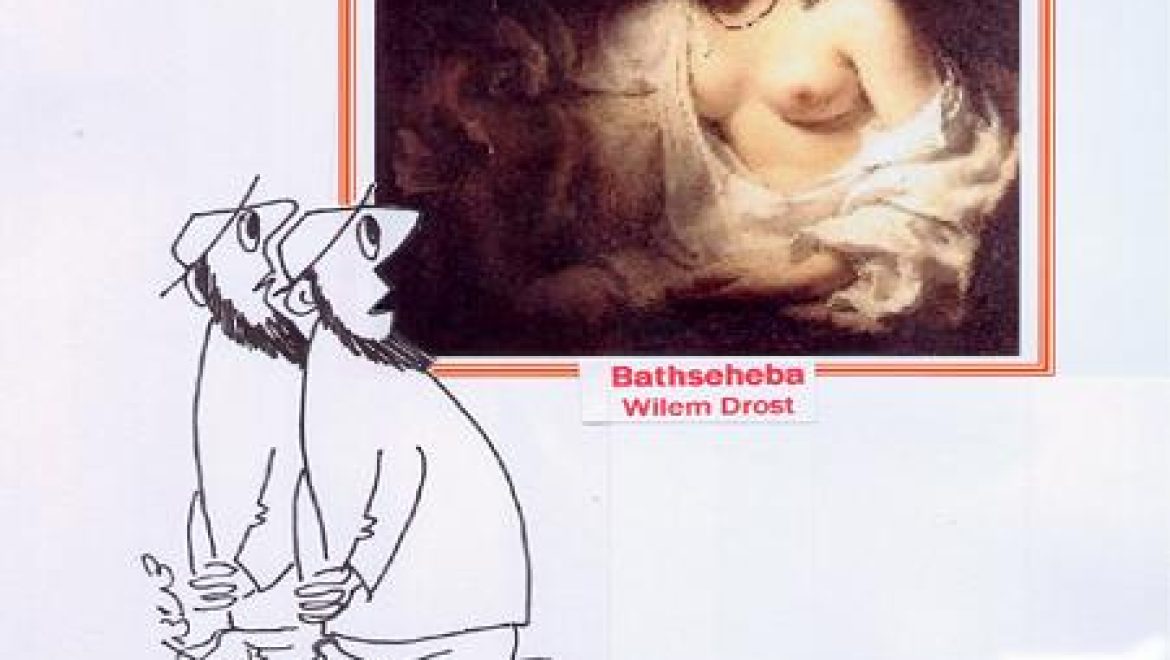
The early sages (the Tanaaim) gave a married woman a basic financial anchor upon which to rest when she is widowed, and this anchor is entrenched in the ketubah. One of a woman’s rights as a widow is the right to live in her late husband’s home and be supported from his assets. In the ketubah (the marriage contract) the husband promises his wife “You shall live in my house and be supported from my assets while you are a widow.” From this wording one of the scholars, Rav Yossef, learned that if the man has no house but only a shed, the widow has no right to live in the building and must find her own place to live or move back with her parents, but she retains the right to be supported from her late husband’s assets. Another scholar, Mar son of Rav Ashi, learned that if the late husband had only a shed and no house the widow is neither entitled to live in the building nor to be supported by his assets. It is also related in the name of the sage Rav Chisda that if a widow had sexual relations with another man she loses her right to be supported from her late husband’s assets. A different sage ruled that if she began to put on make up and jewelry she loses her right to be supported from her late husband’s assets. The scholars concluded from his words that if she began to put on make up she loses her right to be supported from her late husband’s assets, but if she had sexual relations she does not lose this right. The scholars asked: What is the difference between one who puts on make up and so loses her living and one who has sexual relations and does not lose her living? Answer: Make up and jewelry is put on because a woman is expressing her wish to become close to other men and not remain a loyal widow to her late husband. But one who has sexual relations with another man is acting due to sexual impulses and not necessarily from a considered desire to wed another man. In the words of the sages, “her desires forced her.” In practice the sages rejected the above and ruled that if the widow demands the amount set for her in the marriage contract she loses her right to live in her late husband’s house and be supported from his assets, claiming that this shows her desire to be done with her ties to her late husband.
(Babylonian Talmud, Tractate Ketubot 54a)

About the Author

ירון ידען View all posts by Yaron Yadan

ירון ידען (נולד בטבריה ב-8 בדצמבר 1961) הוא פעיל חברתי ומייסד ארגון "דעת אמת" העומד בראש מפלגת אור.

Additional Peppers
Does a woman whose hymen was torn by a stick have the marriage rights of a virgin or a non-virgin?

Does a woman whose hymen was torn by a stick have the marriage rights of a virgin or a non-virgin?

How do we know that the cities Lod, Ono, and Gei Charashim were walled in the era of Joshua?

How do we know that the cities Lod, Ono, and Gei Charashim were walled in the era of Joshua?

How did Rabbi Akiva see the beautiful wife of the Roman commissioner? By surprise!

How did Rabbi Akiva see the beautiful wife of the Roman commissioner? By surprise!

An animal which was slaughtered and in her womb was a fetus shaped like a person — may the fetus be eaten?

An animal which was slaughtered and in her womb was a fetus shaped like a person — may the fetus be eaten?

A mother who had sexual relations with her son is forbidden to marry a cohen

A mother who had sexual relations with her son is forbidden to marry a cohen

From what point can a girl become pregnant?

From what point can a girl become pregnant?

How did they count the throwing of the blood at the Holy Temple curtain on Yom Kippur?

How did they count the throwing of the blood at the Holy Temple curtain on Yom Kippur?

© 2016 כל הזכויות שמורות לדעת אמת.
Skip to content
Open toolbar Accessibility Tools

Accessibility Tools

  • Increase TextIncrease Text
  • Decrease TextDecrease Text
  • GrayscaleGrayscale
  • High ContrastHigh Contrast
  • Negative ContrastNegative Contrast
  • Light BackgroundLight Background
  • Links UnderlineLinks Underline
  • Readable FontReadable Font
  • Reset Reset