Daat Emet
  • Torah, Science & Ethics
    • Pamphlets
    • Scientific Errors in Torah
    • Religion & Ethics
    • Mitzvahs
    • Religion Caught in Its Own Net
  • Torah & Talmud
    • Weekly Portion
    • Torah Text
    • Talmud Issues
    • Daily Peppers
  • Questions & Answers
  • Who We Are
    • About Daat Emet
    • Our Supporters
    • Support Us
  • English
    • עברית (Hebrew)
    • Русский (Russian)
    • Yiddish
    • Français (French)
  • Torah, Science & Ethics
    • Pamphlets
    • Scientific Errors in Torah
    • Religion & Ethics
    • Mitzvahs
    • Religion Caught in Its Own Net
  • Torah & Talmud
    • Weekly Portion
    • Torah Text
    • Talmud Issues
    • Daily Peppers
  • Questions & Answers
  • Who We Are
    • About Daat Emet
    • Our Supporters
    • Support Us
  • English
    • עברית (Hebrew)
    • Русский (Russian)
    • Yiddish
    • Français (French)
Daat Emet
  • Torah, Science & Ethics
    • Pamphlets
    • Scientific Errors in Torah
    • Religion & Ethics
    • Mitzvahs
    • Religion Caught in Its Own Net
  • Torah & Talmud
    • Weekly Portion
    • Torah Text
    • Talmud Issues
    • Daily Peppers
  • Questions & Answers
  • Who We Are
    • About Daat Emet
    • Our Supporters
    • Support Us
  • English
    • עברית (Hebrew)
    • Русский (Russian)
    • Yiddish
    • Français (French)
  • Torah, Science & Ethics
    • Pamphlets
    • Scientific Errors in Torah
    • Religion & Ethics
    • Mitzvahs
    • Religion Caught in Its Own Net
  • Torah & Talmud
    • Weekly Portion
    • Torah Text
    • Talmud Issues
    • Daily Peppers
  • Questions & Answers
  • Who We Are
    • About Daat Emet
    • Our Supporters
    • Support Us
  • English
    • עברית (Hebrew)
    • Русский (Russian)
    • Yiddish
    • Français (French)
From where in the Torah do we derive the resurrection of the dead?
Home » Daily Peppers
Yaron Yadan 01/17/2010
From where in the Torah do we derive the resurrection of the dead?

Though the Scriptures make no explicit mention of the World to Come and the resurrection of the dead, the sages explained verses in a way which would strengthen faith in the resurrection of the dead and show that it is no invention of the sages but hinted at in the Torah. They wished this so heartily that they ruled “These are those which have no portion in the World to Come: one who says that the resurrection of the dead does not come from the Torah” (Sanhedrin 90a).
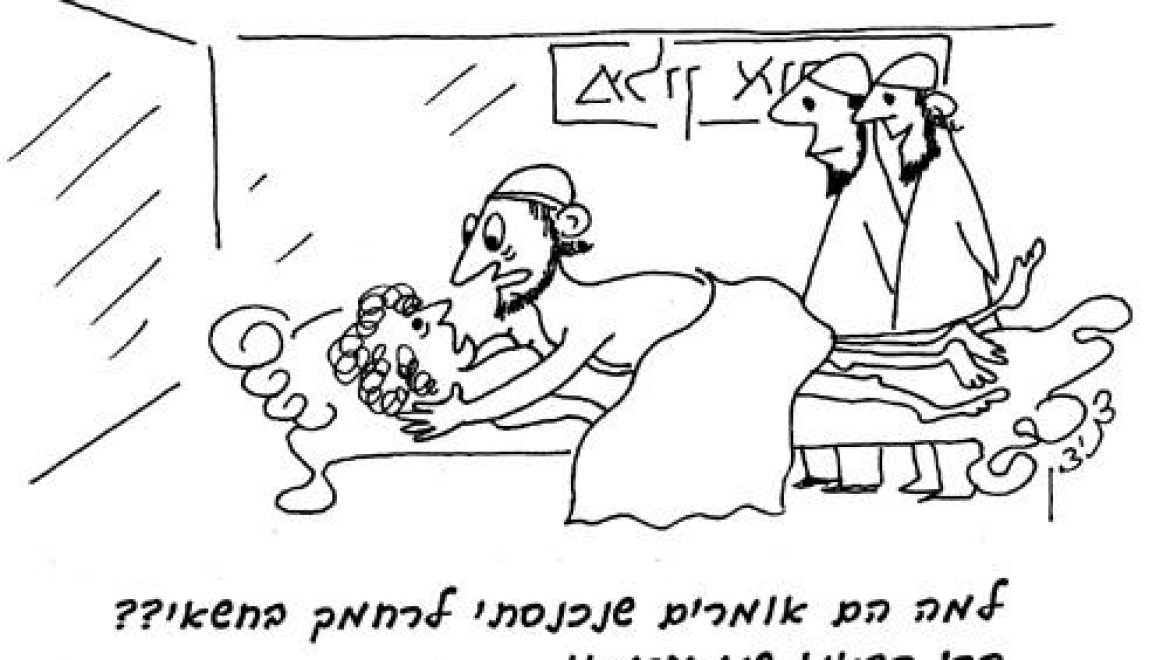
The sages brought many exegeses to show that there is a source for the resurrection of the dead from the Torah. One of them is from the book of Proverbs: “The grave, the barren womb, the earth that is not satisfied with water” (Proverbs 30:16). Rabbi Tabi said: Why did the Scriptures place the grave, which represents death and burial, near the womb, which represents sexual relations and birth? To teach, by analogy from minor to major, about the resurrection of the dead. Just as one enters the womb quietly during sexual relations and the infant exits loudly during birth, so are death and burial accompanied by loud sounds, and so surely the dead will emerge from their graves loudly. This analogy serves as an eternal answer to those who claim that the resurrection of the dead is not from the Torah.
(Babylonian Talmud, Tractate Sanhedrin 92a)

About the Author

ירון ידען View all posts by Yaron Yadan

ירון ידען (נולד בטבריה ב-8 בדצמבר 1961) הוא פעיל חברתי ומייסד ארגון "דעת אמת" העומד בראש מפלגת אור.

Additional Peppers
A Jew who has accidental sexual relations with an animal and a gentile who has sexual relations with an animal

A Jew who has accidental sexual relations with an animal and a gentile who has sexual relations with an animal

A woman is wed through sexual relations and another, in the middle of that intercourse, weds her through other means

A woman is wed through sexual relations and another, in the middle of that intercourse, weds her through other means

Are the children of a married woman who habitually commits adultery <I>mamzerim</I>?

Are the children of a married woman who habitually commits adultery mamzerim?

Is one permitted to learn Torah in the presence of the odor of flatulence?

Is one permitted to learn Torah in the presence of the odor of flatulence?

Who were the ravens which fed the prophet Elijah?

Who were the ravens which fed the prophet Elijah?

Is one permitted to violate the Sabbath for a person who has eye trouble?

Is one permitted to violate the Sabbath for a person who has eye trouble?

Fish from a river whose bed does not breed impure fish are permitted

Fish from a river whose bed does not breed impure fish are permitted

© 2016 כל הזכויות שמורות לדעת אמת.
Skip to content
Open toolbar Accessibility Tools

Accessibility Tools

  • Increase TextIncrease Text
  • Decrease TextDecrease Text
  • GrayscaleGrayscale
  • High ContrastHigh Contrast
  • Negative ContrastNegative Contrast
  • Light BackgroundLight Background
  • Links UnderlineLinks Underline
  • Readable FontReadable Font
  • Reset Reset