Daat Emet
  • Torah, Science & Ethics
    • Pamphlets
    • Scientific Errors in Torah
    • Religion & Ethics
    • Mitzvahs
    • Religion Caught in Its Own Net
  • Torah & Talmud
    • Weekly Portion
    • Torah Text
    • Talmud Issues
    • Daily Peppers
  • Questions & Answers
  • Who We Are
    • About Daat Emet
    • Our Supporters
    • Support Us
  • English
    • עברית (Hebrew)
    • Русский (Russian)
    • Yiddish
    • Français (French)
  • Torah, Science & Ethics
    • Pamphlets
    • Scientific Errors in Torah
    • Religion & Ethics
    • Mitzvahs
    • Religion Caught in Its Own Net
  • Torah & Talmud
    • Weekly Portion
    • Torah Text
    • Talmud Issues
    • Daily Peppers
  • Questions & Answers
  • Who We Are
    • About Daat Emet
    • Our Supporters
    • Support Us
  • English
    • עברית (Hebrew)
    • Русский (Russian)
    • Yiddish
    • Français (French)
Daat Emet
  • Torah, Science & Ethics
    • Pamphlets
    • Scientific Errors in Torah
    • Religion & Ethics
    • Mitzvahs
    • Religion Caught in Its Own Net
  • Torah & Talmud
    • Weekly Portion
    • Torah Text
    • Talmud Issues
    • Daily Peppers
  • Questions & Answers
  • Who We Are
    • About Daat Emet
    • Our Supporters
    • Support Us
  • English
    • עברית (Hebrew)
    • Русский (Russian)
    • Yiddish
    • Français (French)
  • Torah, Science & Ethics
    • Pamphlets
    • Scientific Errors in Torah
    • Religion & Ethics
    • Mitzvahs
    • Religion Caught in Its Own Net
  • Torah & Talmud
    • Weekly Portion
    • Torah Text
    • Talmud Issues
    • Daily Peppers
  • Questions & Answers
  • Who We Are
    • About Daat Emet
    • Our Supporters
    • Support Us
  • English
    • עברית (Hebrew)
    • Русский (Russian)
    • Yiddish
    • Français (French)
Why do women have their breasts on their chests?
Home » Daily Peppers
Yaron Yadan 04/27/2010
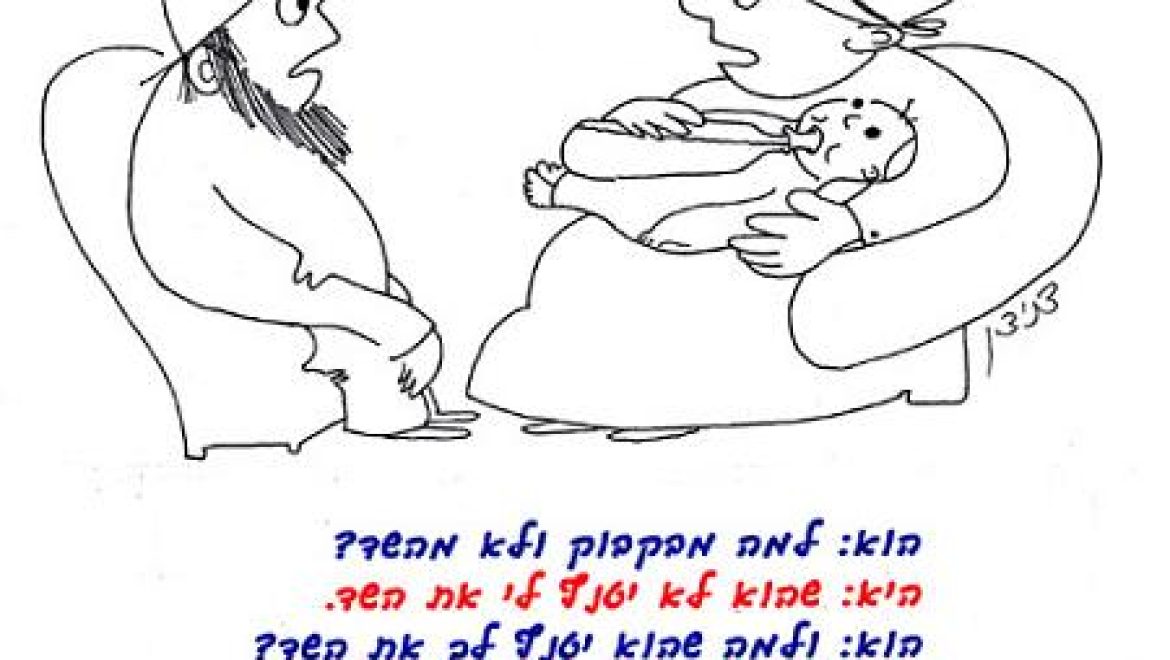
Why do women have their breasts on their chests?

According to the sage Rabbi Shimon son of Yochai, King David wrote psalms about fundamental experiences in his life, including being a fetus in his mother’s womb, his birth, and being nursed. What psalm did he write about being nursed? He nursed from his mother and looked at her breasts and sang praise: ” Bless the Lord, O my soul, and forget not all His benefits [gemulav]” (Psalms 103:2). Gemulav means weaning, as is written about the end of Isaac’s nursing: “And the child grew and was weaned [vayigamal].” The scholars asked: What praise is there in the words “all His benefits”? Answer: That a woman’s breasts are on her chest, close to her heart, the location of understanding. The scholars went on to ask: Why did G-d create the woman’s breasts on her chest and not like other animals, whose teats are on their bellies, close to their sexual organs? Answer: So that the infant, when being nursed, will not look at its mother’s sexual organ. A different scholar, Rav Mattena, explained that it is so an infant will not nurse from a place close to her sexual organ, which is foul.”
(Babylonian Talmud, Tractate Berachot 10a)

About the Author

ירון ידען View all posts by Yaron Yadan

ירון ידען (נולד בטבריה ב-8 בדצמבר 1961) הוא פעיל חברתי ומייסד ארגון "דעת אמת" העומד בראש מפלגת אור.

Additional Peppers
Demons do not utter the name of G-d

Demons do not utter the name of G-d

A levir who falls from the roof and whose sexual organ penetrates the widow of his brother — has he acquired her?

A levir who falls from the roof and whose sexual organ penetrates the widow of his brother — has he acquired her?

It is forbidden to teach laws of personal relations and of adultery to three students

It is forbidden to teach laws of personal relations and of adultery to three students

How long does it take for a couple to engage in partial sexual relations?

How long does it take for a couple to engage in partial sexual relations?

From what part of the vagina does menstrual blood render a woman impure? From the place where a male organ threshes!

From what part of the vagina does menstrual blood render a woman impure? From the place where a male organ threshes!

One who bows to spring waters — may that water be poured upon the altar?

One who bows to spring waters — may that water be poured upon the altar?

Elisha son of Avuya left religion when he saw reality which contradicted Torah promises

Elisha son of Avuya left religion when he saw reality which contradicted Torah promises

© 2016 כל הזכויות שמורות לדעת אמת.
Skip to content
Open toolbar Accessibility Tools

Accessibility Tools

  • Increase TextIncrease Text
  • Decrease TextDecrease Text
  • GrayscaleGrayscale
  • High ContrastHigh Contrast
  • Negative ContrastNegative Contrast
  • Light BackgroundLight Background
  • Links UnderlineLinks Underline
  • Readable FontReadable Font
  • Reset Reset