Daat Emet
  • Torah, Science & Ethics
    • Pamphlets
    • Scientific Errors in Torah
    • Religion & Ethics
    • Mitzvahs
    • Religion Caught in Its Own Net
  • Torah & Talmud
    • Weekly Portion
    • Torah Text
    • Talmud Issues
    • Daily Peppers
  • Questions & Answers
  • Who We Are
    • About Daat Emet
    • Our Supporters
    • Support Us
  • English
    • עברית (Hebrew)
    • Русский (Russian)
    • Yiddish
    • Français (French)
  • Torah, Science & Ethics
    • Pamphlets
    • Scientific Errors in Torah
    • Religion & Ethics
    • Mitzvahs
    • Religion Caught in Its Own Net
  • Torah & Talmud
    • Weekly Portion
    • Torah Text
    • Talmud Issues
    • Daily Peppers
  • Questions & Answers
  • Who We Are
    • About Daat Emet
    • Our Supporters
    • Support Us
  • English
    • עברית (Hebrew)
    • Русский (Russian)
    • Yiddish
    • Français (French)
Daat Emet
  • Torah, Science & Ethics
    • Pamphlets
    • Scientific Errors in Torah
    • Religion & Ethics
    • Mitzvahs
    • Religion Caught in Its Own Net
  • Torah & Talmud
    • Weekly Portion
    • Torah Text
    • Talmud Issues
    • Daily Peppers
  • Questions & Answers
  • Who We Are
    • About Daat Emet
    • Our Supporters
    • Support Us
  • English
    • עברית (Hebrew)
    • Русский (Russian)
    • Yiddish
    • Français (French)
  • Torah, Science & Ethics
    • Pamphlets
    • Scientific Errors in Torah
    • Religion & Ethics
    • Mitzvahs
    • Religion Caught in Its Own Net
  • Torah & Talmud
    • Weekly Portion
    • Torah Text
    • Talmud Issues
    • Daily Peppers
  • Questions & Answers
  • Who We Are
    • About Daat Emet
    • Our Supporters
    • Support Us
  • English
    • עברית (Hebrew)
    • Русский (Russian)
    • Yiddish
    • Français (French)
A Jewish slave who wishes to continue in his servitude must have his ear pierced — against the door or the doorpost?
Home » Daily Peppers
Yaron Yadan 12/21/2008
A Jewish slave who wishes to continue in his servitude must have his ear pierced — against the door or the doorpost?

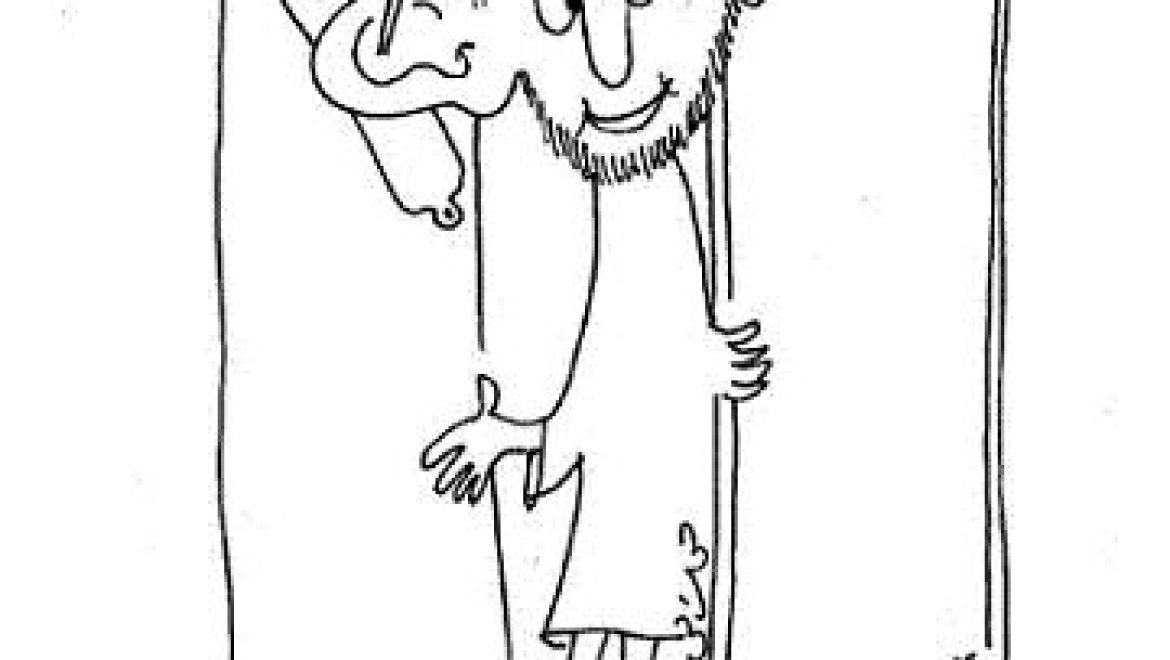
According to the laws of the Torah, when a Jew who purchases another Jew as a slave the length of servitude is six years. If the Jewish slave wishes to remain a slave at the end of the six years he must be acquired by piercing his earlobe with an awl; the Torah states “If you buy a Hebrew servant, he shall serve six years; and in the seventh he shall go out free and pay nothing…But if the servant plainly says, ‘I love my master, my wife, and my children; I will not go out free’, then his master shall bring him to the judges. He shall also bring him to the door, or to the doorpost, and his master shall pierce his ear with an awl; and he shall serve him forever” (Exodus 21:2-6). The early sages ruled, in contrast to what is implied in the Torah, that the master must rest the ear only on the door, not on the doorpost. This Torah law is also written in Deuteronomy: “Then you shall take an awl and thrust it through his ear and to the door” (Deuteronomy 15: 17). The early sages interpreted the verses above so: Were the law stated “Then you shall take an awl and thrust it through his ear in the door” the law would mean that one must stick only the door, opposite the slave’s ear, but the ear itself is not to be pierced. The scholars ask: How can we interpret the law to mean that the ear is not pierced? It is, after all, explicitly written in Exodus “His master shall pierce his ear with an awl.” The scholars said that the early sages meant that one could interpret the law to mean that the ear is pierced by itself, without leaning on the door, and then it is placed on the door and the door is pierced through the hole already in the ear. But since it is written “through his ear and to the door,” this means that one pierces the ear while it is resting on the door: “he bores through the ear until he reaches the door.” The sages also stated that the door must be attached to the hinges and not detached from its frame. How did they know this? Since the Scriptures placed the door and the frame next to each other it means, the sages say, that the door is as the frame. Just as the sides of the doorframe are standing, so the door must be attached and on the hinges.
(Babylonian Talmud, Tractate Kiddushin 22b)

About the Author

ירון ידען View all posts by Yaron Yadan

ירון ידען (נולד בטבריה ב-8 בדצמבר 1961) הוא פעיל חברתי ומייסד ארגון "דעת אמת" העומד בראש מפלגת אור.

Additional Peppers
One who bows to spring waters — may that water be poured upon the altar?

One who bows to spring waters — may that water be poured upon the altar?

A dentist who extracts the tooth of his slave during treatment

A dentist who extracts the tooth of his slave during treatment

What distance between breasts is sufficient to allow a woman to be divorced without payment of her ketuba?

What distance between breasts is sufficient to allow a woman to be divorced without payment of her ketuba?

One is forbidden to hold in urine lest he become sterile and his belly swell

One is forbidden to hold in urine lest he become sterile and his belly swell

The fertilized eggs of a sick tereifah hen are permitted and the unfertilized are not

The fertilized eggs of a sick tereifah hen are permitted and the unfertilized are not

A thorn in the mouth of the ox which threshes the wheat

A thorn in the mouth of the ox which threshes the wheat

A fetal cow in the womb of a camel: pure or impurifying?

A fetal cow in the womb of a camel: pure or impurifying?

© 2016 כל הזכויות שמורות לדעת אמת.
Skip to content
Open toolbar Accessibility Tools

Accessibility Tools

  • Increase TextIncrease Text
  • Decrease TextDecrease Text
  • GrayscaleGrayscale
  • High ContrastHigh Contrast
  • Negative ContrastNegative Contrast
  • Light BackgroundLight Background
  • Links UnderlineLinks Underline
  • Readable FontReadable Font
  • Reset Reset