Daat Emet
  • Torah, Science & Ethics
    • Pamphlets
    • Scientific Errors in Torah
    • Religion & Ethics
    • Mitzvahs
    • Religion Caught in Its Own Net
  • Torah & Talmud
    • Weekly Portion
    • Torah Text
    • Talmud Issues
    • Daily Peppers
  • Questions & Answers
  • Who We Are
    • About Daat Emet
    • Our Supporters
    • Support Us
  • English
    • עברית (Hebrew)
    • Русский (Russian)
    • Yiddish
    • Français (French)
  • Torah, Science & Ethics
    • Pamphlets
    • Scientific Errors in Torah
    • Religion & Ethics
    • Mitzvahs
    • Religion Caught in Its Own Net
  • Torah & Talmud
    • Weekly Portion
    • Torah Text
    • Talmud Issues
    • Daily Peppers
  • Questions & Answers
  • Who We Are
    • About Daat Emet
    • Our Supporters
    • Support Us
  • English
    • עברית (Hebrew)
    • Русский (Russian)
    • Yiddish
    • Français (French)
Daat Emet
  • Torah, Science & Ethics
    • Pamphlets
    • Scientific Errors in Torah
    • Religion & Ethics
    • Mitzvahs
    • Religion Caught in Its Own Net
  • Torah & Talmud
    • Weekly Portion
    • Torah Text
    • Talmud Issues
    • Daily Peppers
  • Questions & Answers
  • Who We Are
    • About Daat Emet
    • Our Supporters
    • Support Us
  • English
    • עברית (Hebrew)
    • Русский (Russian)
    • Yiddish
    • Français (French)
  • Torah, Science & Ethics
    • Pamphlets
    • Scientific Errors in Torah
    • Religion & Ethics
    • Mitzvahs
    • Religion Caught in Its Own Net
  • Torah & Talmud
    • Weekly Portion
    • Torah Text
    • Talmud Issues
    • Daily Peppers
  • Questions & Answers
  • Who We Are
    • About Daat Emet
    • Our Supporters
    • Support Us
  • English
    • עברית (Hebrew)
    • Русский (Russian)
    • Yiddish
    • Français (French)
The second brood of a dove-cot are for sale, the first is not
Home » Daily Peppers
Yaron Yadan 06/01/2009
The second brood of a dove-cot are for sale, the first is not

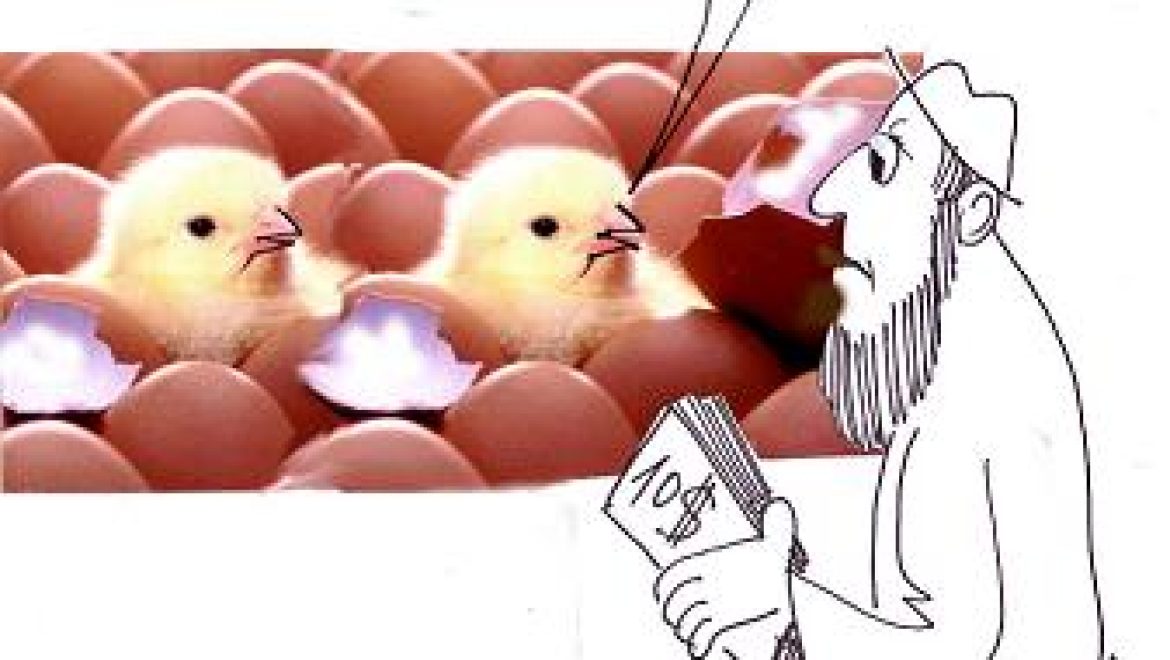
The early sages ruled that if one purchases broods of pigeons which will, in the next year, be born within a specific dove-cot, the first brood to hatch belongs to the seller and not to the purchaser. The first pair of birds born are to remain with the seller so the dove-cot is not entirely emptied of pigeons. If there are no fledglings in the dove-cot even the parents will fly away and not return. The scholars asked: The early sages, in a different place, ruled that the first and second broods remain with the seller, in contrast with what is stated above, that only the first pair remain. Answer: The second pair referred to, which stay with the seller, are the hatchlings of eggs laid by the first pair of birds. The second brood of birds born of the adult pair belong to the purchaser. The scholars asked: The reason we leave the first pair of hatchlings in the dove-cot is to keep the parents in the dove-cot because of the need to raise the young and stay with their mate. If so, the first pair of fledglings will stay in the dove-cot because of the need to stay with their mate and their parents, so why did the early sages require the next brood be left to the seller? Answer: The parents feel a need to live with their offspring, but the offspring do not feel the need to live with their parents.
(Babylonian Talmud, Tractate Bava Batra 80a)

About the Author

ירון ידען View all posts by Yaron Yadan

ירון ידען (נולד בטבריה ב-8 בדצמבר 1961) הוא פעיל חברתי ומייסד ארגון "דעת אמת" העומד בראש מפלגת אור.

Additional Peppers
One may chop vegetables on Yom Kippur for cooking after the fast

One may chop vegetables on Yom Kippur for cooking after the fast

One who bakes on a holiday for the week is exempt as he might need the goods on the holiday

One who bakes on a holiday for the week is exempt as he might need the goods on the holiday

How do we know that the sex act is acquisition in marriage?

How do we know that the sex act is acquisition in marriage?

The hand of the priest was cut off after he threw the blood of a bird at the altar

The hand of the priest was cut off after he threw the blood of a bird at the altar

A widow (awaiting a levirate marriage) who burns the sandal of her brother-in-law (the levir)

A widow (awaiting a levirate marriage) who burns the sandal of her brother-in-law (the levir)

A woman gives birth to a lamb and the father marries the lamb off — may the husband of the lamb marry the sister of the lamb?

A woman gives birth to a lamb and the father marries the lamb off — may the husband of the lamb marry the sister of the lamb?

A Jewish slave who wishes to continue in his servitude must have his ear pierced — against the door or the doorpost?

A Jewish slave who wishes to continue in his servitude must have his ear pierced — against the door or the doorpost?

© 2016 כל הזכויות שמורות לדעת אמת.
Skip to content
Open toolbar Accessibility Tools

Accessibility Tools

  • Increase TextIncrease Text
  • Decrease TextDecrease Text
  • GrayscaleGrayscale
  • High ContrastHigh Contrast
  • Negative ContrastNegative Contrast
  • Light BackgroundLight Background
  • Links UnderlineLinks Underline
  • Readable FontReadable Font
  • Reset Reset