Daat Emet
  • Torah, Science & Ethics
    • Pamphlets
    • Scientific Errors in Torah
    • Religion & Ethics
    • Mitzvahs
    • Religion Caught in Its Own Net
  • Torah & Talmud
    • Weekly Portion
    • Torah Text
    • Talmud Issues
    • Daily Peppers
  • Questions & Answers
  • Who We Are
    • About Daat Emet
    • Our Supporters
    • Support Us
  • English
    • עברית (Hebrew)
    • Русский (Russian)
    • Yiddish
    • Français (French)
  • Torah, Science & Ethics
    • Pamphlets
    • Scientific Errors in Torah
    • Religion & Ethics
    • Mitzvahs
    • Religion Caught in Its Own Net
  • Torah & Talmud
    • Weekly Portion
    • Torah Text
    • Talmud Issues
    • Daily Peppers
  • Questions & Answers
  • Who We Are
    • About Daat Emet
    • Our Supporters
    • Support Us
  • English
    • עברית (Hebrew)
    • Русский (Russian)
    • Yiddish
    • Français (French)
Daat Emet
  • Torah, Science & Ethics
    • Pamphlets
    • Scientific Errors in Torah
    • Religion & Ethics
    • Mitzvahs
    • Religion Caught in Its Own Net
  • Torah & Talmud
    • Weekly Portion
    • Torah Text
    • Talmud Issues
    • Daily Peppers
  • Questions & Answers
  • Who We Are
    • About Daat Emet
    • Our Supporters
    • Support Us
  • English
    • עברית (Hebrew)
    • Русский (Russian)
    • Yiddish
    • Français (French)
  • Torah, Science & Ethics
    • Pamphlets
    • Scientific Errors in Torah
    • Religion & Ethics
    • Mitzvahs
    • Religion Caught in Its Own Net
  • Torah & Talmud
    • Weekly Portion
    • Torah Text
    • Talmud Issues
    • Daily Peppers
  • Questions & Answers
  • Who We Are
    • About Daat Emet
    • Our Supporters
    • Support Us
  • English
    • עברית (Hebrew)
    • Русский (Russian)
    • Yiddish
    • Français (French)
One who shames a sleeping man who then dies
Home » Daily Peppers
Yaron Yadan 08/31/2009
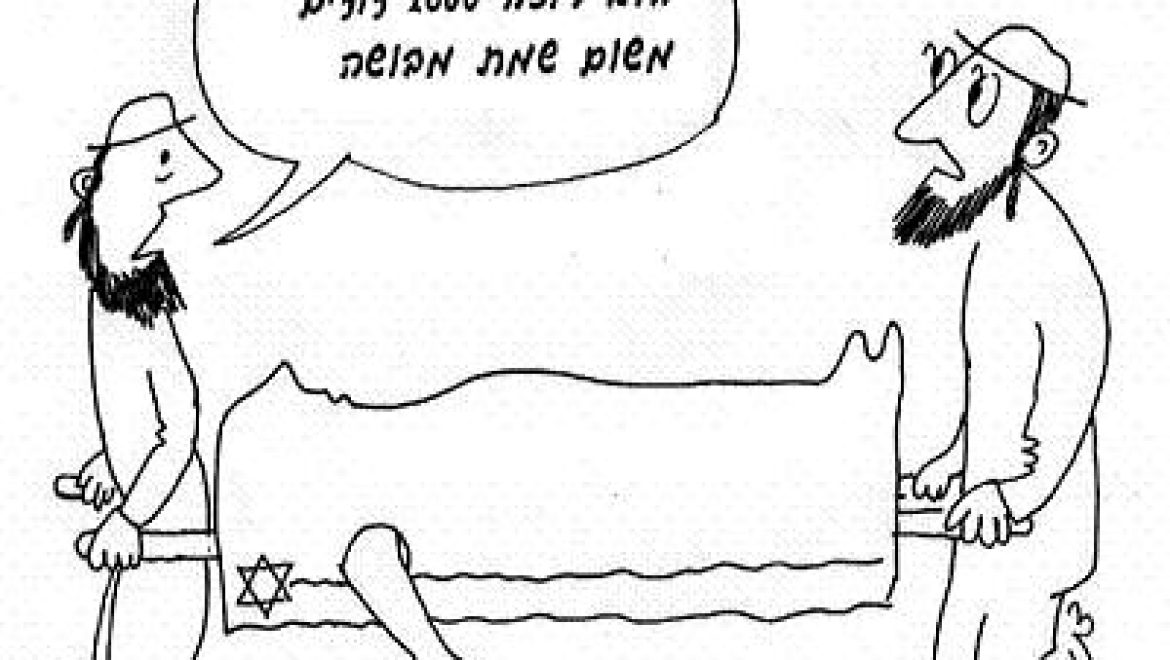
One who shames a sleeping man who then dies

One who shames another must pay the shamed party reparations. It was the sages who determined the amount of reparations due. Thus, for example, they ruled that one who slaps another (the slap not only causes physical pain, it embarrasses) must pay 200 zuz (approximately 40,000 NIS, as the rapist of an unmarried girl would pay), and one who slaps another with the back of his hand (which doubles the insult) is assessed by the sages at 400 zuz (approximately 80,000 NIS).
One of the sages, Abba son of Mamel, asks: if one shames a sleeping person who subsequently dies, unaware that he had been shamed, must the reparations be paid? What are the issues under debate? On one hand, he did not know he had been shamed. On the other hand, he may not have known he had been shamed, but the act caused him to be belittled before the masses. Another sage, Rav Papa, put the issues under debate thusly: are the reparations paid because of the shame caused to the person who was embarrassed (in our case he had not been embarrassed because he slept and then immediately died), or are the reparations for the shame of the family (in our case, though he slept and then died, the family was still shamed)?
(Babylonian Talmud, Tractate Bava Kamma 86b)

About the Author

ירון ידען View all posts by Yaron Yadan

ירון ידען (נולד בטבריה ב-8 בדצמבר 1961) הוא פעיל חברתי ומייסד ארגון "דעת אמת" העומד בראש מפלגת אור.

Additional Peppers
May one call Abraham Abram?

May one call Abraham Abram?

Healing infants, particularly after circumcision

Healing infants, particularly after circumcision

Prayer for the sex of a fetus can help only when the parents climax simultaneously

Prayer for the sex of a fetus can help only when the parents climax simultaneously

Which amulets are permitted for wear as necklaces on the Sabbath?

Which amulets are permitted for wear as necklaces on the Sabbath?

When are worms permissible for eating?

When are worms permissible for eating?

A Jewish slave who wishes to continue in his servitude must have his ear pierced — against the door or the doorpost?

A Jewish slave who wishes to continue in his servitude must have his ear pierced — against the door or the doorpost?

How do we know that the <I>pri hadar</I> is an etrog?

How do we know that the pri hadar is an etrog?

© 2016 כל הזכויות שמורות לדעת אמת.
Skip to content
Open toolbar Accessibility Tools

Accessibility Tools

  • Increase TextIncrease Text
  • Decrease TextDecrease Text
  • GrayscaleGrayscale
  • High ContrastHigh Contrast
  • Negative ContrastNegative Contrast
  • Light BackgroundLight Background
  • Links UnderlineLinks Underline
  • Readable FontReadable Font
  • Reset Reset