Daat Emet
  • Torah, Science & Ethics
    • Pamphlets
    • Scientific Errors in Torah
    • Religion & Ethics
    • Mitzvahs
    • Religion Caught in Its Own Net
  • Torah & Talmud
    • Weekly Portion
    • Torah Text
    • Talmud Issues
    • Daily Peppers
  • Questions & Answers
  • Who We Are
    • About Daat Emet
    • Our Supporters
    • Support Us
  • English
    • עברית (Hebrew)
    • Русский (Russian)
    • Yiddish
    • Français (French)
Which stone may be used to wipe one
Home » Daily Peppers
Yaron Yadan 08/20/2009
Which stone may be used to wipe one

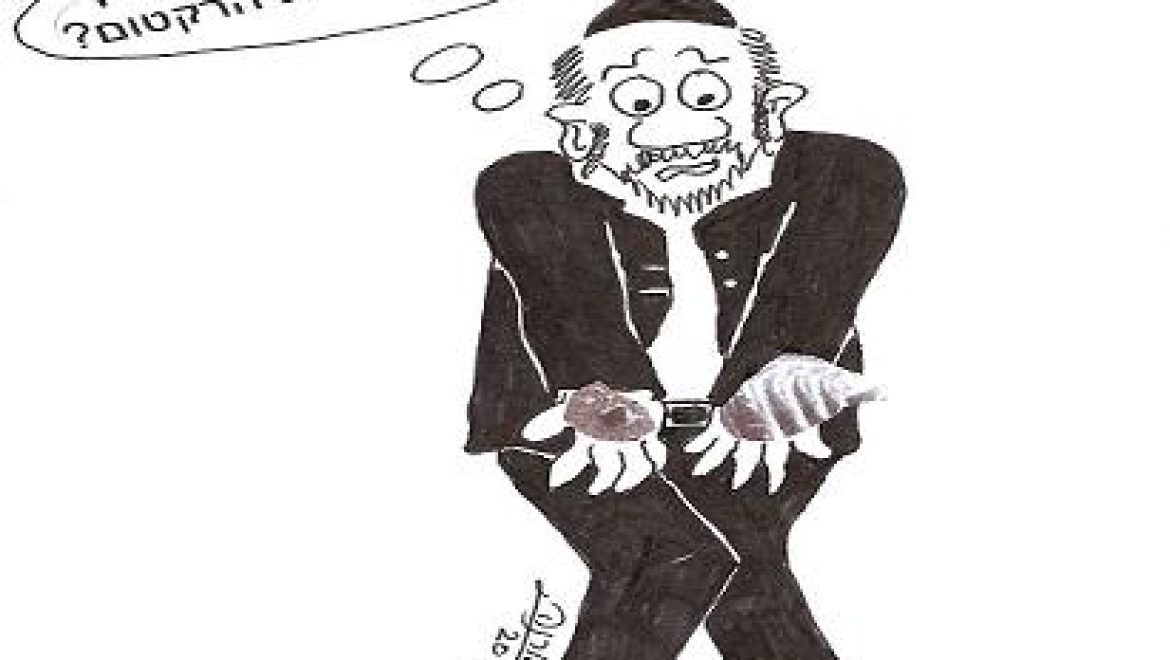
On the Sabbath one is forbidden to carry objects and items for which one has no use on the Sabbath. Therefore one is forbidden to carry and to hold stones on the Sabbath, since there is no way to use them. (Halacha calls them muktza.) But if a person needs to excrete, and it would stand to reason he would have to wipe his excrement from his anus (they used to wipe their anuses with stones), he may carry up to three stones which have the correct shape for wiping his anus. The sages were divided upon the size of the stones which one is permitted to carry for purposes of wiping one’s anus; some say the size permitted is the size of an olive, while some say that it is the size of an egg. One sage, Rabbi Yannai, added that the limitation to three stones for use in wiping one’s anus is only if one goes to excrete in a place not designated for such use. But if he goes to a place meant for this purpose (a designated toilet facility) he may take a larger quantity of stones as long as he can hold them in a single hand. Another sage, Rav Sheshet, added that the size restrictions — like an olive, a nut, or an egg — are for stones which have not been designated for wiping or which do not bear signs of previous use, but if the stone has been designated for wiping the anus, such as those which bear traces of previous use, one may take a larger stone. The scholars asked: from Rav Sheshet’s words it appears that one may wipe with a stone which others have already used to wipe, but didn’t our sages warn us against wiping with a stone others have used lest he develop hemorrhoids? The scholars answered that there are several possibilities for permitting one to use a stone another has previously been used while still avoiding hemorrhoids: if the other person’s excrement has already dried on the stone, or if he uses the clean side of the stone, or if the excrement upon the stone is his own, from a previous use. Another sage, Abaye, asked Rav Yosef: what is the rule if rain fell upon a stone which had signs of previous use and cleaned the traces off, is one permitted to carry it or not? What are the issues under debate? On one hand, the stone did have signs of previous use which showed that the stone had been designated for this use. On the other hand, the signs have been removed, and thus its specific designation has been nullified. Rav Yosef answered that if a trace of the excrement remains visible, it is permitted.
(Babylonian Talmud, Tractate Shabbat 81a)

About the Author

ירון ידען View all posts by Yaron Yadan

ירון ידען (נולד בטבריה ב-8 בדצמבר 1961) הוא פעיל חברתי ומייסד ארגון "דעת אמת" העומד בראש מפלגת אור.

Additional Peppers
One who bakes on a holiday for the week is exempt as he might need the goods on the holiday

One who bakes on a holiday for the week is exempt as he might need the goods on the holiday

A Jewish slave who wishes to continue in his servitude must have his ear pierced — against the door or the doorpost?

A Jewish slave who wishes to continue in his servitude must have his ear pierced — against the door or the doorpost?

What sounds must be made in blowing the shofar on Rosh Hashanah — whimpers or moaning?

What sounds must be made in blowing the shofar on Rosh Hashanah — whimpers or moaning?

Has one who began to blow shofar within a well and finished outside the well fulfilled his obligation to blow shofar?

Has one who began to blow shofar within a well and finished outside the well fulfilled his obligation to blow shofar?

Does the fox have venom in its claws?

Does the fox have venom in its claws?

Clouds which rained wheat

Clouds which rained wheat

How to cause a hill of ants to kill each other

How to cause a hill of ants to kill each other

© 2016 כל הזכויות שמורות לדעת אמת.
Skip to content
Open toolbar Accessibility Tools

Accessibility Tools

  • Increase TextIncrease Text
  • Decrease TextDecrease Text
  • GrayscaleGrayscale
  • High ContrastHigh Contrast
  • Negative ContrastNegative Contrast
  • Light BackgroundLight Background
  • Links UnderlineLinks Underline
  • Readable FontReadable Font
  • Reset Reset